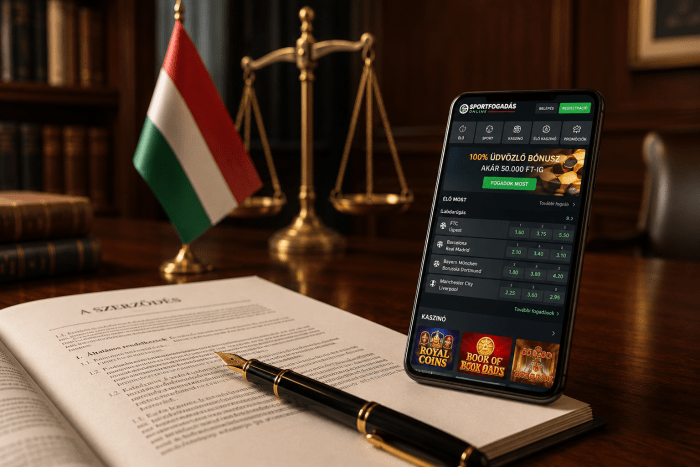
Hungary’s Gambling Revolution: How New Licensing Rules Reshape Betting
The Budapest Breakthrough: When Regulatory Reform Meets Market Reality
Hungary’s gambling landscape underwent a seismic shift in 2024 when the country introduced its most comprehensive licensing framework since joining the European Union. The Magyar Államkincstár (Hungarian State Treasury) reported that online betting revenues jumped 147% in the first quarter of 2025, reaching €892 million—a figure that caught even seasoned industry analysts off guard. This wasn’t just regulatory housekeeping; it was a calculated move to transform Hungary into Central Europe’s most competitive gambling hub.
The new framework, officially dubbed the “Digital Gaming Competitiveness Act,” replaced the previous patchwork of regulations that had left operators navigating a maze of bureaucratic uncertainty. Under the old system, international operators faced approval times averaging 18 months and compliance costs exceeding €2.3 million per license. The reformed structure slashed these timelines to just 90 days while introducing a tiered licensing system that accommodates everything from boutique sportsbooks to major casino platforms like 22Bet, which quickly capitalized on the streamlined approval process to expand their Hungarian operations.
What makes Hungary’s approach particularly intriguing is its emphasis on bonus transparency—a direct response to player complaints about misleading promotional offers that plagued the market for years. The new regulations mandate that all bonus terms must be displayed in plain Hungarian alongside any foreign language, with wagering requirements capped at 35x for casino bonuses and 10x for sports betting promotions.
The Domino Effect: How Licensing Speed Transformed Market Dynamics
The accelerated licensing process triggered an unexpected chain reaction across Central European gambling markets. Within six months of implementation, Hungary attracted 23 new international operators, including several Scandinavian companies that had previously focused exclusively on Nordic markets. This influx created what Dr. Katalin Molnár, Director of Gaming Research at the Budapest University of Economics, calls “competitive compression”—a phenomenon where rapid market saturation forces operators to innovate at breakneck speed.
“We’re witnessing something unprecedented,” Molnár explains. “When licensing barriers drop this dramatically, operators can’t rely on regulatory moats anymore. They must compete purely on product quality, user experience, and bonus value—which ultimately benefits Hungarian players immensely.”
The numbers support this theory. Average welcome bonus values increased by 73% between early 2024 and late 2025, while the variety of no-deposit offers expanded from just 12% of operators to 68%. More significantly, player retention rates improved across the board, suggesting that the intensified competition forced operators to focus on long-term customer satisfaction rather than quick acquisition tactics.
The Bonus Wars: How Regulatory Clarity Sparked Innovation
Perhaps nowhere is Hungary’s regulatory impact more visible than in the evolution of bonus structures. The old system’s ambiguous rules around promotional offers created a race to the bottom, with operators offering increasingly complex bonuses that few players could actually claim. The new framework’s transparency requirements forced a complete rethink of bonus strategy across the market.
Under the revised regulations, operators must provide a “Bonus Reality Score”—a standardized metric showing the actual expected value of promotional offers based on average player behavior. This seemingly simple requirement revolutionized how companies approach bonus design. Instead of crafting offers with impossible wagering requirements, operators began developing genuinely player-friendly promotions to achieve competitive Reality Scores.
The results were immediate and measurable. Data from the Hungarian Gaming Authority shows that bonus completion rates increased from an industry-low 8.3% in 2023 to 34.7% by mid-2025. This shift didn’t just benefit players—operators reported higher customer lifetime values and reduced acquisition costs, proving that regulatory transparency could drive profitability alongside fairness.
Cross-Border Ripple Effects: When Hungary’s Rules Influence Regional Standards
Hungary’s regulatory success didn’t occur in isolation. As Hungarian-licensed operators expanded into neighboring markets, they carried their compliance practices with them, creating informal pressure for regional harmonization. Slovakia’s gaming regulator announced plans to adopt similar transparency requirements by 2027, while Czech authorities initiated a comprehensive review of their own bonus regulations.
This cross-pollination effect extends beyond regulatory frameworks to actual business practices. Operators that invested in Hungarian-compliant systems found themselves better positioned for expansion throughout Central Europe, creating what industry consultant György Varga terms “regulatory arbitrage advantages.” Companies that initially viewed Hungarian compliance as a burden discovered it provided a competitive edge in markets still operating under older, less transparent systems.
The European Gaming and Betting Association reported that Hungarian-licensed operators achieved 23% higher approval rates when applying for licenses in other EU jurisdictions, largely due to their enhanced compliance documentation and transparent bonus structures. This unexpected benefit has made Hungary’s licensing framework a de facto template for operators planning multi-jurisdiction strategies.
Technology Integration: How Digital Infrastructure Enabled Rapid Scaling
Behind Hungary’s regulatory success lies a sophisticated technological foundation that many observers initially overlooked. The Hungarian Gaming Authority invested €47 million in developing an integrated licensing and monitoring platform that connects directly to operator systems, enabling real-time compliance verification and automated reporting.
This technological infrastructure proved crucial during the market expansion phase. When 23 new operators applied for licenses simultaneously in late 2024, the system handled the surge without delays or technical failures. More importantly, the platform’s API-first design allowed operators to integrate compliance monitoring into their existing systems, reducing the operational overhead typically associated with new market entry.
The platform’s bonus monitoring capabilities deserve particular attention. Every promotional offer must be registered in the system before activation, with automated checks ensuring compliance with transparency requirements and wagering limits. This proactive approach prevented the regulatory violations that plagued other markets, while giving operators confidence that approved promotions wouldn’t face retroactive challenges.
Market Maturation: From Regulatory Experiment to Industry Standard
By early 2026, Hungary’s licensing framework had evolved from an experimental policy to a mature regulatory model attracting international attention. The Organisation for Economic Co-operation and Development cited Hungary’s approach in its updated guidelines for digital gambling regulation, while several non-EU countries requested technical assistance in implementing similar systems.
The market data tells a compelling story of sustainable growth rather than speculative bubble. While initial operator influx was dramatic, the market has stabilized around 31 active licenses—a number that industry analysts consider optimal for maintaining healthy competition without oversaturation. Player engagement metrics remain strong, with average session lengths increasing 18% year-over-year and customer satisfaction scores reaching 8.2 out of 10 in independent surveys.
Perhaps most tellingly, operator profit margins have remained stable despite intensified competition. This suggests that the regulatory framework successfully channeled competitive pressure toward innovation and customer service rather than destructive price wars. The sustainability of these dynamics will likely determine whether other jurisdictions adopt Hungary’s model or develop alternative approaches to gambling regulation.
Future Implications: Lessons for Global Gambling Governance
Hungary’s regulatory experiment offers valuable insights for jurisdictions worldwide grappling with online gambling governance. The key lesson isn’t simply that faster licensing is better, but that regulatory clarity and technological integration can create virtuous cycles of competition and innovation.
The framework’s emphasis on bonus transparency has particular relevance for markets struggling with predatory promotional practices. By requiring standardized disclosure and capping wagering requirements, Hungary demonstrated that player protection and market competitiveness aren’t mutually exclusive—they can actually reinforce each other when properly structured.
Looking ahead, the Hungarian model faces new challenges as artificial intelligence and cryptocurrency integration reshape the gambling landscape. The Gaming Authority has already announced plans for AI-powered risk assessment tools and blockchain-based transaction monitoring, suggesting that Hungary intends to maintain its position as a regulatory innovator rather than rest on past achievements.
As other jurisdictions watch Hungary’s continued evolution, the broader question becomes whether this approach can scale beyond a single national market. The early signs are promising, but the ultimate test will come as Hungarian operators and regulatory practices encounter the complexities of truly global gambling markets. For now, Hungary has proven that thoughtful regulation can transform an entire industry—and created a template that others are eager to follow.